
Average Hot Tub Temperature Is a Preferred Range
For many adults, 100-102°F is commonly recommended. A sensible starting point is 98-100°F, while 104°F is a ceiling, not a target.
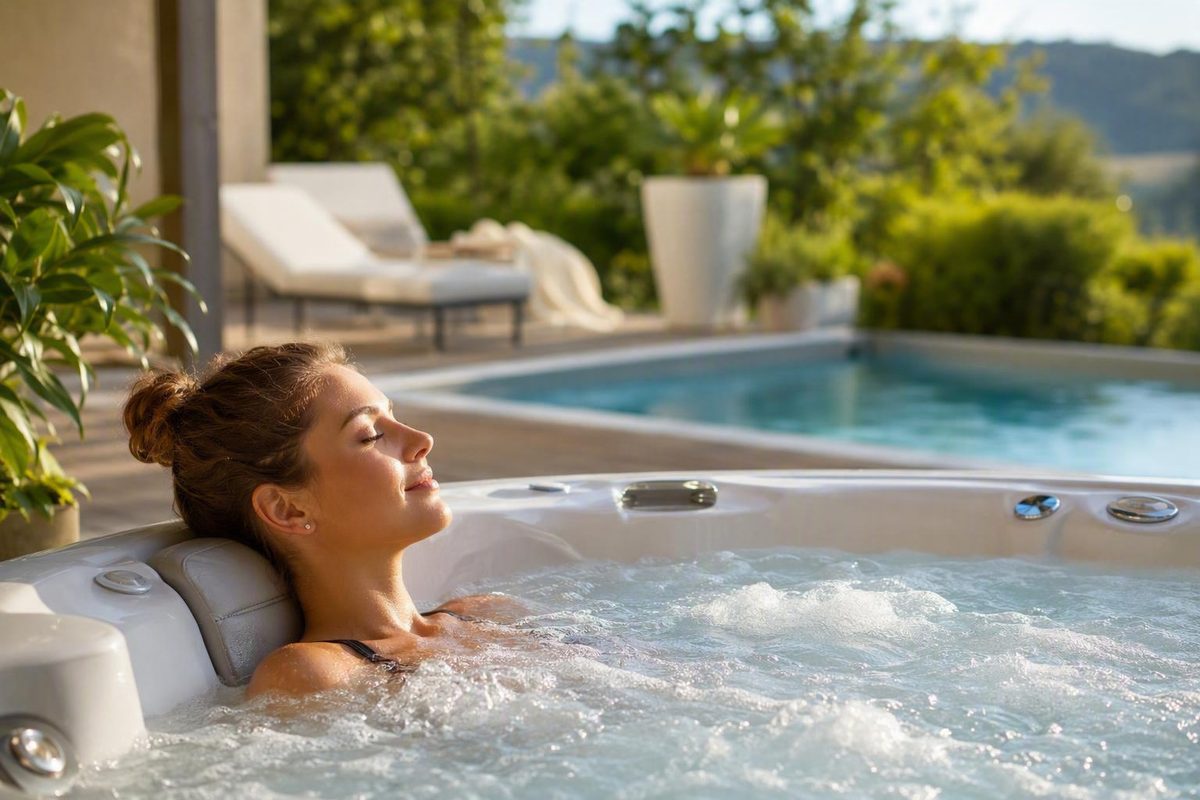
How to find a comfortable setting without mistaking the maximum for the ideal.
The short answer: Most guides recommend 100–102°F
Quick answer
- Commonly preferred everyday range: 100–102°F (about 38–39°C)
- Broader comfort range: 98–102°F (about 37–39°C)
- Sensible starting range: 98–100°F (about 37–38°C)
- Commonly cited upper limit: 104°F (40°C)
These figures describe recommended or preferred settings, not a statistically measured average. Jacuzzi reports that most users prefer 100–102°F and identifies 104°F as the standard maximum in its hot-tub temperature guidance.
For many adults, 100–102°F (approximately 38–39°C) is the range most consistently described by the supplied manufacturer and retailer guides as comfortable or popular for an everyday soak.
That does not mean researchers have measured a representative sample of hot-tub thermostats and calculated a population average. The available evidence contains no representative owner survey, connected-spa telemetry, or comparable statistical measurement of real-world settings. The most accurate description is therefore a commonly preferred or recommended range, not a proven numerical average.
Three reference points make the guidance easier to understand:
- 98–102°F (about 37–39°C) is a broader comfort range encompassing gentler and warmer preferences.
- 100–102°F (about 38–39°C) is the common everyday recommendation for many adults.
- 104°F (40°C) is a commonly cited ceiling, not the default or ideal setting.
A setting below 100°F is not inherently wrong. Gentler water may feel better in warm weather, during a social soak, or to someone who is more sensitive to heat. Comfort can also change with the weather and from one day to the next.
The practical approach is to begin below the hottest setting, assess how the water feels, and adjust gradually. The temperature display should not be treated as a challenge to reach 104°F.
Hot-tub temperature chart by use case
The following ranges are starting points rather than guarantees of safety. Commercial guidance describes 98–102°F as a standard-use range, 100–102°F as preferred by many users, 85–95°F as a cooler summer range, and 104°F as the maximum in this hot-tub temperature guide.
| Use case | Fahrenheit | Celsius | Practical notes |
|---|---|---|---|
| First session or heat-sensitive user | 98–100°F | About 37–38°C | Begin near the lower end and increase gradually only if comfortable. |
| Ordinary adult soak | 100–102°F | About 38–39°C | Commonly recommended for everyday use by many adults. |
| Gentler social soak | 98–100°F | About 37–38°C | Less intense than the upper end of the everyday range, but not a basis for assuming any duration is risk-free. |
| Warm summer soak | 98–100°F | About 37–38°C | Preserves a warm-water feel without using the hotter settings. |
| Cooler summer use | 85–95°F | About 29–35°C | A broad commercial range; available settings and cooling capability vary by model. |
| Commonly cited maximum | 104°F | 40°C | Treat as a ceiling rather than a routine target. Individual tolerance and health considerations vary. |
The suggested starting range is also consistent with Hot Spring’s advice to begin at 98°F or 99°F and raise the setting gradually. The table is not a treatment schedule, and it should not be used to select temperatures for arthritis, injury recovery, exercise, rehabilitation, or another medical purpose.
A few degrees can noticeably change the experience. Water at 98°F may feel gently warm rather than distinctly hot. At 100°F, many people experience a warm soak without the intensity of the upper settings. At 102°F, the heat may become more noticeable as the session continues. At 104°F, the fact that the setting is at the cited ceiling should matter more than any desire to maximize heat.
Age, pregnancy, health conditions, medications, alcohol use, outdoor conditions, and individual heat tolerance may all affect whether a particular setting is appropriate. Anyone considering hot-tub use in connection with a medical condition or treatment should obtain individualized professional guidance rather than relying on a general temperature chart.
How to find your personal setting
If you are deciding among 98°F, 100°F, and 102°F, begin around 98–100°F (approximately 37–38°C). That is especially sensible for a first session, a new owner who has not learned their heat tolerance, or someone who already suspects they prefer gentler water.
Increase the target in small increments instead of immediately selecting the hottest available setting. Give yourself enough time to judge the experience rather than deciding solely from the first moment of contact.
A practical progression is:
- Set the spa to 98°F or 99°F.
- Confirm the actual water temperature before entering.
- Spend a few minutes assessing your comfort.
- If the water feels mild and you want more heat, increase the target by a small increment.
- Stop increasing it when the heat becomes distracting or uncomfortable.
Hot Spring recommends this start-low approach and says that wanting to get out or move onto a cooling step after only a few minutes is a practical indication that the water is too hot for that user in its temperature-setting advice.
For many users, 100°F feels gentler than 102°F and may suit conversation or a less intense soak. That observation does not establish a universal duration at either temperature. It simply recognizes that a lower setting will generally feel less hot.
102°F is a warmer comfort choice, not an objectively better temperature. Someone who enjoys pronounced heat on a cold evening may prefer it, while another person may find the same setting oppressive.
Before choosing a setting, consider:
- The outdoor temperature and humidity
- Sun and wind exposure
- How long you expect to remain in the water
- Your current health and heat tolerance
- Whether you are ill or already feel overheated
- Medications or substances that may affect alertness or heat response
- The needs of everyone sharing the tub
For a group, do not simply average everyone’s preferred numbers. Choose a setting suitable for the least heat-tolerant participant. A lower shared setting is usually easier to accommodate than one that forces someone to leave after only a few minutes.
Consult the owner’s manual before changing modes or operating limits. Available temperature ranges, minimum settings, heating behavior, display functions, and adjustment procedures differ by model. General online guidance cannot replace the instructions for a specific spa.
Why 104°F is a ceiling, not the everyday goal
The central distinction is simple:
- 100–102°F is commonly described as a comfortable everyday range.
- 104°F is commonly described as the upper limit.
A maximum available setting tells you where the designed or permitted range ends. It does not mean that the highest setting is desirable for every user or every session.
Several commercial spa guides attribute the 104°F ceiling to the U.S. Consumer Product Safety Commission. The supplied evidence does not independently establish every current CPSC, Underwriters Laboratories, certification, or legal requirement, so the regulatory history needs careful wording.
One retailer reproduces a CPSC advisory dated December 31, 1979, and quotes provisions attributed to UL 1563 that specify a maximum temperature-control set point of 40°C or 104°F, with no marked setting above that level. That historical account of the 104°F maximum helps explain why the figure is widely cited, but it is secondhand material rather than independent verification of every current rule.
Even below the ceiling, water can be too hot for a particular person. Someone who becomes uncomfortable at 101°F should not remain immersed merely because the display is below 104°F.
Cold outdoor air can make hotter water more appealing, but it does not justify recommending a setting above 104°F. If you prefer warmer water during winter, remain within the spa’s documented operating limits and pay close attention to comfort.
If a control prevents a selected setting or displays an error, consult the manual or obtain qualified service rather than overriding the protection.
Match soak time to temperature and watch for overheating
Temperature and soak duration should be considered together. As the water becomes hotter, a shorter session is generally the more cautious approach. A duration that feels manageable in gentler water should not automatically be carried over to the maximum setting.
Published commercial recommendations vary. Some guides suggest 15–30 minutes for an ordinary session, while Hot Spring gives approximately 20 minutes at 100–102°F for healthy adults. Royal Spa advises limiting a 104°F session to about 15–20 minutes in its temperature and session guide.
These figures are examples of manufacturer or retailer guidance, not validated medical limits that apply to everyone. They should not be interpreted as permission to remain in the water until a timer expires. Tolerance can differ with age, health, medication use, alcohol, water temperature, weather, and how a person feels that day.
Leave the hot tub promptly if you experience commercially cited warning signs such as:
- Dizziness or lightheadedness
- Nausea
- Headache
- Faintness
- Unusual drowsiness
- Feeling excessively hot or unwell
Do not try to complete a planned session after discomfort begins. Leave the water and cool down. No temperature-and-time combination should be described as risk-free for every person.
Alcohol deserves particular caution. The historical CPSC advisory reproduced by Roberts Hot Tubs warns that hot water can contribute to drowsiness and unconsciousness and that alcohol can compound drowning risk. The same reproduced advisory flags medications that induce drowsiness as a reason to obtain medical advice.
If a medication affects alertness, blood pressure, or heat tolerance—or if you are unsure whether it does—ask the prescribing clinician or pharmacist about hot-tub use.
A timer can help someone who tends to lose track of time, but it is only a reminder. It is not a guarantee that remaining in the water for the selected period is appropriate.
Adjusting the temperature for summer, winter, and shared use
A hot-tub setting does not have to remain fixed throughout the year. Air temperature, humidity, sun, wind, and personal preference can change how the same water temperature feels.
In summer
For a cooler soak, 85–95°F (approximately 29–35°C) is a broad range found in commercial guidance. For a conventionally warm summer experience, 98–100°F (approximately 37–38°C) may be more comfortable. Master Spas presents these as cooler and warmer options in its warm-weather spa guide.
Check the manual before choosing a low set point. Minimum settings differ among models, and not every spa provides the same temperature range.
Also distinguish a lower set point from active cooling. Reducing the control setting does not immediately remove heat from water that is already warm. Outdoor conditions can affect how cool the water becomes, and active cooling may require model-specific equipment. Follow the manufacturer’s instructions for circulation modes, cover use, economy settings, or approved cooling equipment.
In winter
Some people prefer the upper portion of their ordinary range during cold weather, while others remain comfortable at a gentler setting because the contrast with cold air makes the water feel warmer.
Winter does not turn the 104°F ceiling into a routine target or justify temperatures above it. Verify the water temperature and leave when the heat becomes uncomfortable rather than lingering because getting out into cold air is unpleasant.
Have a towel, robe, footwear, and a clear route indoors ready before entering. Freeze-protection requirements vary by model.
For families and groups
Choose the lowest comfortable setting that accommodates the most heat-sensitive participant. Before entering, consider whether anyone:
- Is pregnant
- Has a relevant health condition
- Takes medication that affects alertness or heat response
- Has consumed alcohol
- Is already overheated or unwell
- Is inexperienced with hot tubs
Depending on the circumstances, the appropriate choice may be a lower setting, a shorter session, individualized professional guidance, or not using the tub.
Energy and heat retention
Whether reducing the temperature saves money depends on climate, insulation, cover condition, electricity rates, frequency of use, heating performance, and freeze-protection requirements. There is no single nonuse temperature that is cheapest for every owner.
A properly fitted, insulated cover can reduce heat loss. Arctic Spas discusses cover insulation, weather, use frequency, and electricity scheduling as factors in hot-tub temperature management. The size of any savings will depend on the spa and its operating conditions.
Avoid generic instructions to turn the spa off or use one low setting for every absence. Follow the manufacturer’s guidance for standby operation, vacation modes, extended nonuse, and winterization.
Children, pregnancy, medications, and medical conditions require extra caution
An everyday comfort range intended for many adults should not be applied automatically to children, pregnant people, older adults, or people with relevant health or medication concerns.
The supplied commercial guides conflict on child-specific temperatures and session limits. Some give different thresholds from one another, and one retailer provides inconsistent child guidance within the same article. That disagreement is a reason not to present a seller-derived number as authoritative pediatric advice.
A parent or guardian should obtain current guidance from an appropriate pediatric healthcare professional before allowing a child to use a hot tub. Supervision remains important, but supervision alone does not establish that a particular water temperature or duration is appropriate.
Commercial sources also consistently direct pregnant people to consult a physician, although their exact temperature and duration recommendations differ and are not supported in the supplied evidence by a current primary obstetric source. Individualized guidance from an obstetric clinician should take priority over a retailer’s chart.
The retailer guidance discusses many of these groups but does not provide a sufficient basis for universal disease-specific limits.
Medication may matter even when a person otherwise feels healthy. Ask a clinician or pharmacist about medicines that cause drowsiness or may affect alertness or heat tolerance.
A lower setting may feel less intense, but it does not answer the underlying medical question.
Verify the actual water temperature and investigate discrepancies
The displayed number and the actual water temperature are related but not necessarily the same thing.
Depending on the model and operating state, a control panel may show:
- The selected target temperature
- A sensor’s current reading
- The target briefly before returning to the current reading
- An error code or operating status
Consult the manual to determine what your display shows. After a recent adjustment, the target and measured temperature may differ while the water heats or cools.
Use an accurate independent water thermometer to verify the temperature, particularly before entering at the hotter end of the range. Follow the thermometer’s instructions and allow the spa to circulate before checking. The supplied evidence does not establish that modern built-in thermostats are generally inaccurate by any fixed number of degrees.
Newly filled tubs also need time to stabilize. Hot Spring says a new fill may take 18–24 hours to reach 100°F, while actual heating time depends on the model, starting water temperature, outdoor conditions, cover use, electrical configuration, and equipment condition in its setup and temperature overview.
If the spa does not approach its set temperature:
- Confirm whether the display shows the target or current temperature.
- Check for economy, sleep, vacation, or restricted-heating modes.
- Follow the manual’s directions for cover use while heating.
- Look for flow, sensor, or high-limit error messages.
- Confirm that the water level and circulation meet the manufacturer’s requirements.
- Inspect or clean filters only as directed by the manual.
- Allow an appropriate stabilization period before concluding that the heater has failed.
Pool Robotic’s blog lists an article titled “Hot Tub Heater Repair: Diagnosing No-Heat Before Buying Parts,” described as covering flow errors, thermostats, and heating elements. Owners can consult the listed heater-repair article as a starting point, while continuing to follow their spa manual and using qualified service where required.
Do not bypass a temperature sensor, thermostat, high-limit control, flow protection, or another safety device during troubleshooting.
Frequently asked questions
Is 100°F or 102°F better for a normal hot-tub soak?
Neither is universally better. 100°F is the gentler option, while 102°F provides a warmer experience within the commonly preferred range. Starting at the lower setting and increasing gradually is the more practical way to learn your preference.
For shared use, choose the lower setting when one participant is less heat tolerant. Leave the tub if either temperature causes dizziness, nausea, headache, unusual drowsiness, faintness, excessive heat, or significant discomfort.
Is 104°F safe, and is it the ideal setting?
104°F is commonly cited as the maximum, not the ideal everyday setting. It should not be presented as appropriate for every person or duration.
If you select the maximum setting, verify the water with an independent thermometer, pay close attention to comfort, and leave promptly if you feel unwell. Age, pregnancy, health conditions, medication use, alcohol, and individual heat tolerance may make that setting inappropriate.
Never exceed the equipment’s documented limits or bypass temperature safeguards.
How long should a hot-tub session last?
Commercial recommendations commonly fall around 15–30 minutes for an ordinary session, with some manufacturers suggesting 15–20 minutes at 104°F. Royal Spa publishes both temperature-related examples, but they remain commercial guidance rather than universal medical limits.
Use the temperature, your individual circumstances, and how you feel rather than relying only on a timer. Leave promptly for dizziness, nausea, headache, faintness, unusual drowsiness, excessive heat, or other significant discomfort.
What temperature should a hot tub be in summer?
For a warm summer soak, try 98–100°F (about 37–38°C). For cooler use, commercial guidance commonly spans approximately 85–95°F (29–35°C).
Your spa’s minimum setting and cooling capability may differ. Reducing the set point also does not provide immediate active cooling, so consult the manual for summer modes and operating instructions.
What temperature is appropriate for children or during pregnancy?
The supplied commercial evidence does not provide a child or pregnancy number that should be treated as universally authoritative. Child recommendations conflict, and the pregnancy limits are not supported here by a current primary obstetric source.
Parents should obtain current pediatric guidance before allowing a child to enter a hot tub. Pregnant people should consult their obstetric clinician. Individualized professional guidance also takes priority when health conditions or medications affect heat tolerance or alertness.
The three temperatures to remember
For the general adult comfort question, remember three reference points: 100–102°F is the commonly recommended everyday range for many adults, 98–100°F is a sensible place to begin, and 104°F is a commonly cited ceiling rather than a target.
Adjust gradually, verify the actual water temperature, treat hotter water more cautiously, and leave at the first sign of discomfort. When age, pregnancy, health conditions, or medication use create additional concerns, obtain current professional guidance rather than relying on a general temperature chart.