
Cost of Water Pump Installation for a Pool
Compare U.S. pool pump installation estimates, separate equipment from labor, and check diagnosis, electrical work and startup before approving a quote.
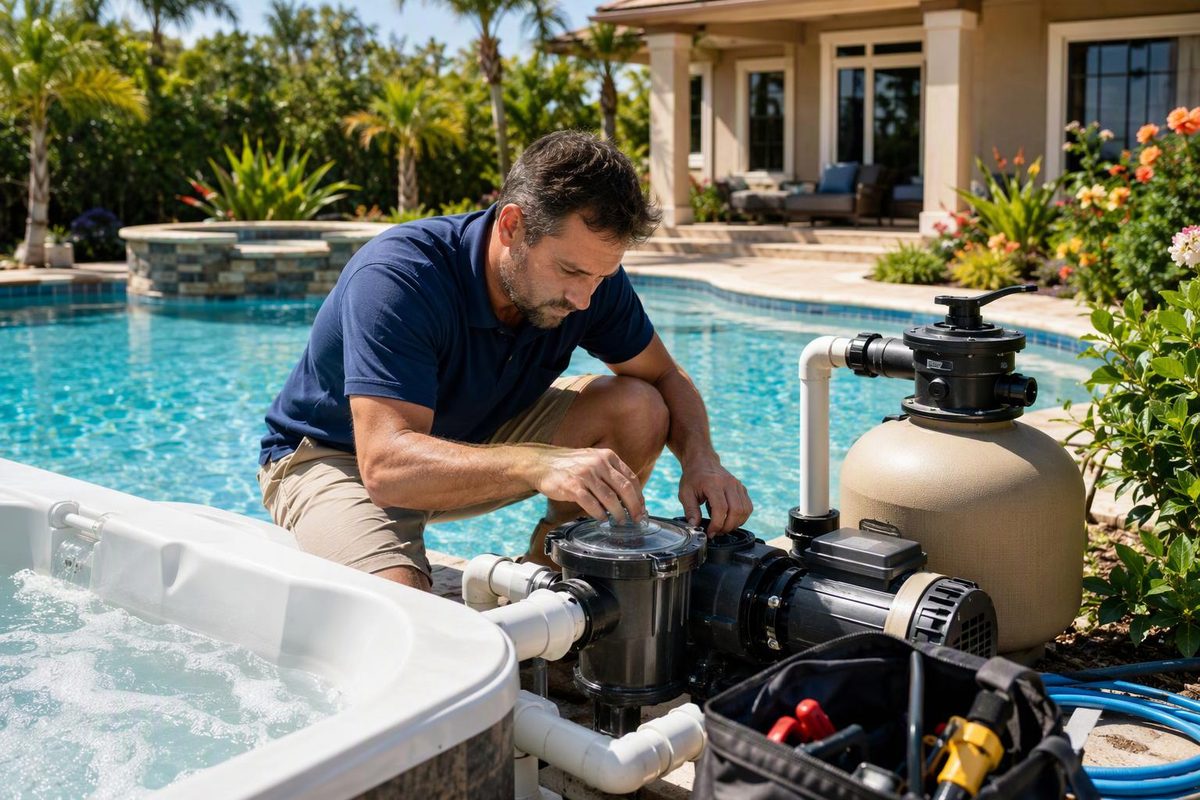
For a swimming-pool circulation pump, a broad U.S. replacement budget is $700–$4,000 installed, with $200–$500 for installation labor. Those are published estimates, not a local quote: Angi’s September 2026 cost guide reports a $1,300 national average, but the pump model and work required matter more than that average.
This guide covers replacing a pump on an existing pool equipment pad—not a household well pump, a new pool’s complete plumbing system, or a portable hot tub’s pump.
Separate equipment cost from installation
Ask whether a price means the pump alone, labor alone, or the complete installed job.
| Cost item | Published U.S. estimate | What to check |
|---|---|---|
| Complete pool pump replacement | $700–$4,000 | Exact model and included work |
| Variable-speed pump, equipment only | $800–$2,500 | Controls and accessories included with that model |
| Installation labor | $200–$500 | Whether plumbing and electrical changes are included |
These ranges come from Angi’s 2026 guide. Adding its variable-speed equipment and labor ranges gives $1,000–$3,000 before any separately charged materials, tax or additional work. That arithmetic is a planning allowance, not a measured installed-price range.
A basic replacement estimate can be lower. Homewyse’s May 2026 example starts at $818–$1,000 for a basic replacement using a 1.5-horsepower energy-efficient pump under favorable conditions. Its scope includes removing the old pump, connecting the replacement to existing plumbing and power, and verifying operation. It is not a price benchmark for every premium variable-speed model or equipment-pad rebuild.
Confirm the fault before buying a pump
Weak circulation alone is not enough reason to authorize replacement.
Before opening a pump lid or filter, isolate power, prevent automatic restart and release pressure exactly as the equipment manuals require. Stop using a pump that trips its GFCI unexpectedly; have the fault corrected rather than repeatedly resetting it. Pentair also warns against running a pump dry. These precautions appear in its IntelliFlo3 installation and maintenance guide.
- Record the symptom. Does the pump fail to start, stop during operation, leak, make a new noise, or run without adequate water flow? Photograph the nameplate and any displayed error.
- Check routine maintenance first. Inspect the skimmer basket and follow the equipment manuals for cleaning the pump basket and filter. ENERGY STAR recommends removing basket debris and maintaining the filter so flow is not restricted. See its pool pump maintenance guidance.
- Request a diagnosis with the quote. Ask which component failed and whether a motor-only or other repair would restore reliable operation. Compare that repair’s installed price and warranty with a complete replacement—not with an online pump-only price.
What can make the quote higher?
Plumbing fit. Different inlet heights, union sizes or clearance requirements can turn a simple swap into pipework changes. Pentair’s IntelliFlo3 guide, for example, specifies clearance and straight suction-pipe requirements and lists retrofit base kits for certain replacements. Have the installer identify the changes before you buy equipment.
Electrical work. Do not assume every variable-speed pump accepts the existing supply. For the IntelliFlo3 VSF models in that guide, the 1.5-horsepower model accepts 115 or 208–230 volts, while the 3-horsepower model requires 208–230 volts. Circuit protection, grounding and bonding also need checking by the qualified installer. Those are model-specific requirements, not a DIY wiring checklist.
Controls and setup. Ask whether the price includes connecting existing automation, any necessary accessories, priming, leak checks and programming. A pump that powers on is not necessarily a fully commissioned system.
Do not choose horsepower from pool volume alone. Ask the installer to confirm the required flow against the plumbing, suction-outlet ratings and equipment limits; Pentair warns that improperly sized pumps can create serious hazards. If you use a cartridge filter, our filter sizing and flow guide explains the filter side of that check.
Approve an itemized scope, not just a total
Get comparable written quotes listing:
- Pump manufacturer and exact model.
- Equipment, labor, fittings and electrical work separately.
- Automation connection and operating-schedule setup.
- Removal, taxes and any required permit charges.
- Manufacturer warranty and installer labor warranty.
- Startup checks and an owner handover.
For a variable-speed upgrade, request an operating-cost estimate based on your electricity rate and proposed schedule—not a guaranteed percentage saving. Pentair itself notes that savings vary with runtime, speed, plumbing and other hydraulic factors in its IntelliFlo3 savings explanation. Check rebate eligibility before purchasing.
For a portable hot tub, obtain a separate, model-specific quote. If the symptom is no heat or a flow error, start with hot-tub no-heat diagnosis rather than applying these pool replacement prices.